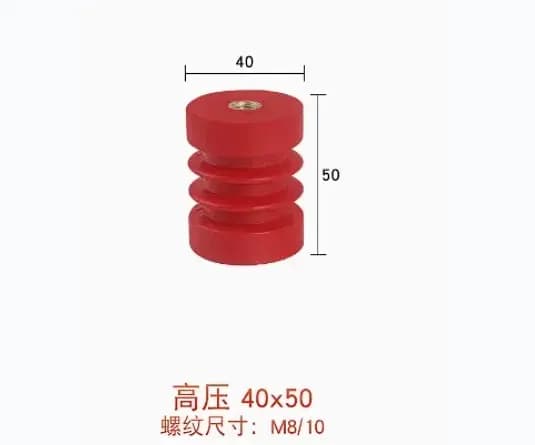
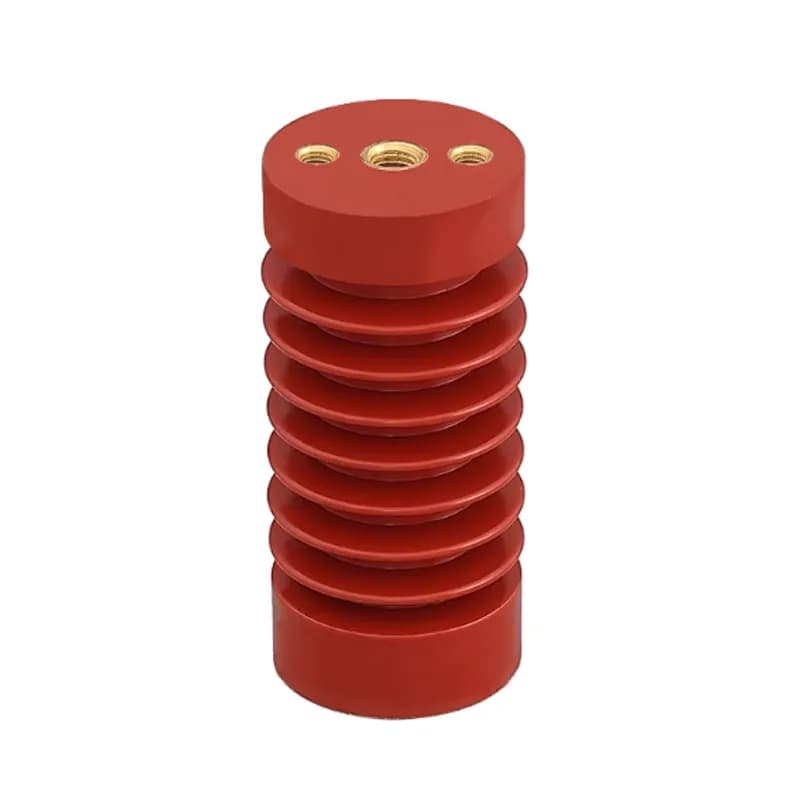
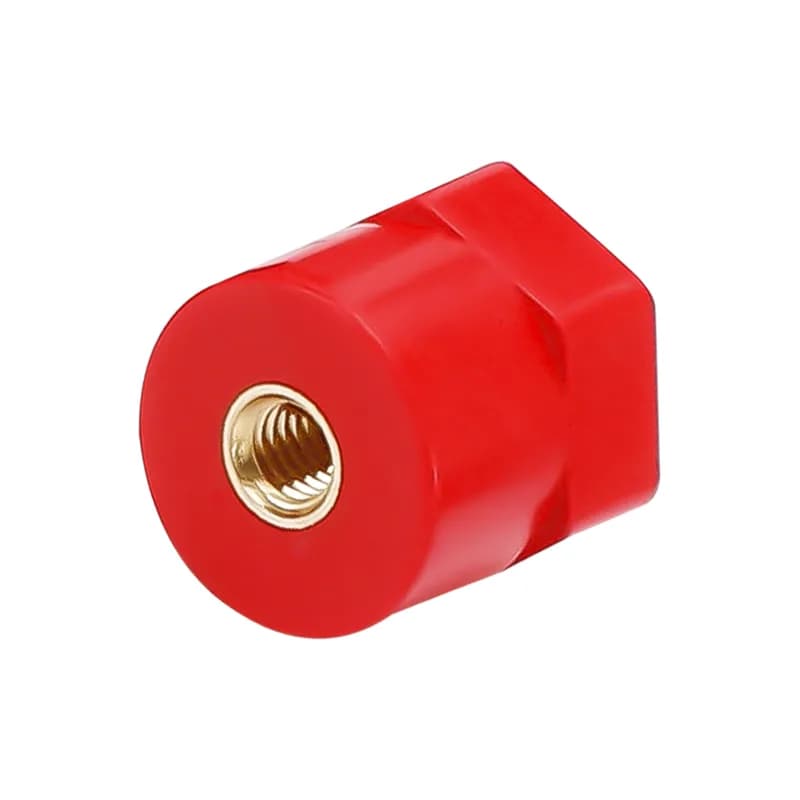
The failures that turn an insulator order into a site problem are almost never electrical. They are an insulator that is too short for the spacing it stands in, or a thread that will not start on the fixing already drilled.
Two measurements decide the part before the voltage class does: the mounting pattern and the height the insulator has to stand.
The pattern is written into the specification where it matters — the ZJ post lists the flange (top flange 70/3-M10, bottom 90/1-M16 on the 35 kV line), and the EL-10Q writes top M12 / bottom M16. Measure the existing holes and half the range eliminates itself.
The height is where the body is made. An insulator has to stand the bar clear of the panel, still leave enough thread above for the busbar foot and the washer, and not stand so tall that the enclosure will not close. Where the standard height does not reach, the range already holds custom bodies quoted from a drawing (60*100 single-hole M10 copper core).
Then the base. Some panels are earthed through the mounting and want a plain base; others take a bolt up from underneath and want a female thread. A line offered top M16 / bottom M24 exists because the switchgear stud and its bar foot are frequently different sizes, and buying one part instead of an insulator and an adapter keeps a joint out of the circuit.
What we ask for on a non-standard panel: the panel or barrier thickness, the hole spacing and diameter, what lands on each face, and how much of the insulator should stand proud once the bar is on. With those, a custom height or a different thread combination is a quote against an existing item number. Without them, it is a survey repeated at the enclosure.